Abstract Seamless Turing Patterns: Transforming Organic Design for Modern Applications
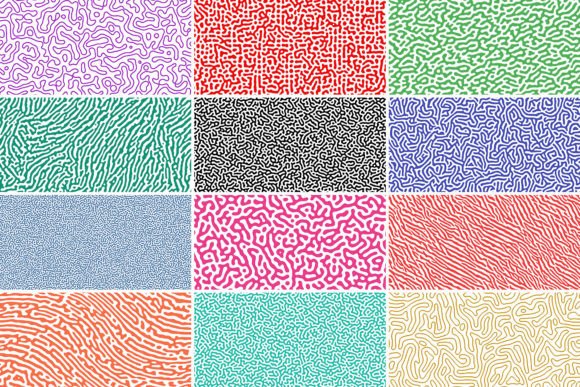
In the rapidly evolving landscape of digital and physical design, finding a visual language that balances mathematical precision with organic fluidity remains a significant challenge. Many creators struggle to produce backgrounds that feel both structured and natural, often settling for repetitive textures or overly chaotic noise. This is where Abstract Seamless Turing Patterns emerge as a transformative solution. By leveraging the principles of diffusion-reaction systems, these patterns offer a unique aesthetic that mimics the complex behaviors found in nature, from animal skin pigmentation to cellular growth.
Whether you are a textile designer looking for the next big print trend, a packaging specialist aiming to stand out on retail shelves, or a digital artist crafting immersive web experiences, understanding the potential of Turing patterns can elevate your workflow. This guide explores how these mathematically inspired yet visually organic illustrations solve common design problems and provides practical strategies for integrating them into your projects.
Understanding the Core Concept
At its heart, an Abstract Seamless Turing Pattern is a visual representation of a reaction-diffusion system. In biology, this phenomenon explains how uniform fields can spontaneously generate spots, stripes, or waves through the interaction of two chemicals: an activator and an inhibitor. When translated into graphic design, this process creates intricate, non-repeating, and highly detailed structures that look entirely organic.
The term "seamless" is critical here. It refers to the technical capability of the pattern to tile infinitely without visible breaks or edges. This means that whether you are printing a bolt of fabric, wrapping a large gift box, or using the image as a full-screen digital background, the continuity is maintained perfectly. The result is a texture that feels alive and dynamic, avoiding the artificial stiffness often associated with computer-generated graphics.
Why Traditional Patterns Fall Short
Designers frequently encounter limitations when working with standard geometric repeats or basic noise filters. Geometric patterns can feel rigid and cold, while random noise lacks the structural beauty that draws the human eye. There is often a gap between the desire for complexity and the ability to create it manually. Abstract Seamless Turing Patterns bridge this gap by offering:
- Natural Variation: Unlike static images, these patterns possess a fluidity that suggests movement and growth.
- Uniqueness: Because they are generated based on variable parameters, each iteration offers a one-of-a-kind allure that cannot be easily replicated.
- Scalability: The seamless nature ensures high-quality output at any resolution, from small mobile icons to massive architectural murals.
Solving Real-World Design Challenges
The primary goal for most professionals using these assets is to add depth and sophistication to their work without overwhelming the viewer. Whether the project involves product packaging or textile manufacturing, the need for a distinct visual identity is paramount. Here is how this specific collection addresses those needs across different industries.
Textile and Fashion Design
For fashion designers, the challenge lies in creating prints that look expensive and hand-crafted. Standard digital prints can sometimes appear flat or pixelated upon close inspection. By utilizing Abstract Seamless Turing Patterns, designers can introduce a level of complexity that mimics natural dyes and organic fibers. These patterns work exceptionally well for:
- High-end Apparel: Creating subtle, textured backgrounds for luxury fabrics that catch the light dynamically.
- Accessories: Adding unique flair to scarves, ties, and handbags where a single, cohesive design is essential.
- Home Textiles: Elevating bed linens and curtains with fluid, wave-like motifs that bring a sense of calm and movement to interior spaces.
Product Packaging and Branding
In a crowded marketplace, packaging must communicate quality instantly. A generic white box or a simple solid color often fails to capture attention. Incorporating an organic looking illustration derived from Turing patterns can signal innovation and premium quality. These designs act as a sophisticated backdrop that allows product photography to pop while providing a rich visual context. They are ideal for:
- Cosmetics and Skincare: Evoking themes of purity, chemistry, and natural ingredients.
- Artisanal Foods and Beverages: Suggesting craft and uniqueness, perfect for limited edition releases.
- Tech Accessories: Providing a modern, futuristic aesthetic that appeals to early adopters.
Digital Art and Web Design Applications
Moving beyond physical goods, the utility of these patterns extends deeply into the digital realm. Web designers and UI/UX specialists often struggle with background elements that distract rather than enhance content. The vibrant fluidity of Turing patterns offers a middle ground—visually engaging but not overpowering.
When used as a digital art background, these patterns can serve as a canvas for interactive elements. Their seamless nature allows for parallax scrolling effects where the background moves at a different speed than the foreground, creating a 3D depth effect. Furthermore, because the patterns are vector-based or high-resolution raster files, they remain crisp on high-DPI screens, ensuring that the user experience is flawless regardless of the device.
Practical Implementation Strategies
To get the most out of the Abstract Turing Pattern Collection, users should consider how they intend to deploy the asset. Different approaches yield different results, and tailoring the usage to the specific medium is key to success.
For Print Professionals
If you are preparing files for commercial printing, ensure that the color mode is set to CMYK to avoid unexpected shifts in hue. The intricate details of Turing patterns can sometimes suffer if the resolution is too low during the scaling process. Always export your final artwork at 300 DPI or higher. Consider using these patterns as a subtle overlay rather than the sole focus, allowing the texture to provide depth without competing with typography or logos.
For Digital Creators
Digital artists can take advantage of the generative aspect of these patterns. Instead of using a static image, try applying filters, blending modes, or opacity adjustments to alter the mood. For instance, lowering the contrast can create a soft, ethereal atmosphere suitable for meditation apps, while increasing saturation can produce bold, energetic visuals for music festivals or gaming interfaces. You can also combine multiple layers of different Turing patterns to create hybrid textures that are even more unique.
Choosing the Right Variation
Not all Turing patterns are created equal. Some variations lean heavily towards spotted textures, resembling leopard or giraffe skins, while others form continuous, flowing lines similar to marble or water currents. Your choice should align with the emotional tone you wish to convey.
If your goal is to evoke stability and strength, opt for patterns with larger, more defined blocks and darker contrasts. Conversely, if you are aiming for elegance and fluidity, choose designs with finer gradients and softer transitions. The versatility of the collection allows you to pivot quickly between styles, making it a robust resource for agencies that handle diverse client portfolios.
Maximizing Value Through Integration
The true power of Abstract Seamless Turing Patterns lies in their adaptability. They are not merely decorative elements; they are foundational tools that can redefine the visual identity of a brand or a product line. By integrating these diffusion-reaction backgrounds into your creative process, you gain access to a library of infinite possibilities that respect both the laws of mathematics and the chaos of nature.
As you explore this collection, remember that the best designs often come from experimentation. Don't be afraid to stretch the patterns, recolor them, or combine them with other media. The vibrant fluidity and one-of-a-kind allure that only the Abstract Turing Pattern Collection can offer are waiting to be unlocked. Whether you are wrapping a product, designing a website, or printing a fabric, these patterns provide the organic foundation needed to make your work stand out in a saturated world.
By focusing on the practical outcomes and the inherent beauty of these mathematical forms, you can create designs that are not only visually stunning but also deeply resonant with audiences who appreciate the intersection of science and art. Embrace the fluidity, explore the patterns, and let the abstract nature of Turing patterns inspire your next great project.